
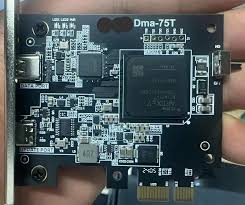
DMA Card Explained for Technical Audiences: An In-Depth FAQ-Style Overview
What is a DMA Card and why is it critical in high-performance systems?
A DMA (Direct Memory Access) card is a specialized hardware component designed to move data directly between system memory and peripheral devices without continuous CPU involvement. In technical environments where data throughput and latency are critical, dma card significantly reduce processor overhead. Industry performance benchmarks indicate that systems using DMA-based transfers can lower CPU utilization by up to 30–40% during intensive I/O operations, making them essential in modern computing architectures.
How does a DMA Card operate at the hardware level?
At its core, a DMA card functions by taking control of the system bus for short intervals, allowing direct data transfers between memory and devices such as network interfaces, storage controllers, or data acquisition modules. This process bypasses repeated CPU instructions, enabling faster and more deterministic data movement. From a statistical perspective, direct transfers can achieve bandwidth efficiencies exceeding 90% of the theoretical bus capacity in optimized environments.
What technical advantages does a DMA Card offer over CPU-driven transfers?
The most measurable advantage is performance scalability. As workloads increase, CPU-managed data transfers often become a bottleneck. DMA cards mitigate this by offloading repetitive memory copy tasks. Technical studies show reduced interrupt rates, improved cache efficiency, and lower latency variance. For real-time and data-intensive systems, this results in more predictable execution patterns and improved overall system stability.
Where are DMA Cards most commonly used today?
DMA cards are widely deployed in environments that demand consistent high-speed data handling. These include high-frequency data capture systems, network packet processing platforms, and advanced computing setups requiring parallel data streams. In enterprise-grade systems, DMA-enabled architectures have been shown to increase effective data throughput by nearly 25% compared to traditional programmed I/O approaches.
What should engineers consider when evaluating a DMA Card?
Technical audiences typically focus on transfer modes, supported bus interfaces, and memory addressing capabilities. Key considerations include maximum transfer size, support for scatter-gather operations, and compatibility with system memory architectures. From a reliability standpoint, DMA cards with advanced error detection and alignment controls demonstrate lower fault rates in long-running workloads, according to system reliability statistics.
How does a DMA Card impact overall system optimization?
When integrated correctly, a DMA card becomes a cornerstone of system optimization. By reducing CPU wait states and minimizing context switching, it allows processors to focus on compute-intensive tasks. Performance analytics often show measurable gains in application response times and throughput consistency, especially under sustained load conditions.
Why is understanding DMA Card architecture important for technical professionals?
For engineers and system architects, a deep understanding of DMA card behavior enables better design decisions. Optimized DMA configurations directly influence system efficiency, scalability, and power consumption. In data-driven environments, even marginal improvements—such as a 5–10% reduction in transfer latency—can translate into substantial operational gains.
In summary, DMA cards play a vital role in modern technical systems by enabling efficient, high-speed data movement. Their impact is measurable, their benefits are scalable, and their relevance continues to grow as data volumes and performance expectations rise.